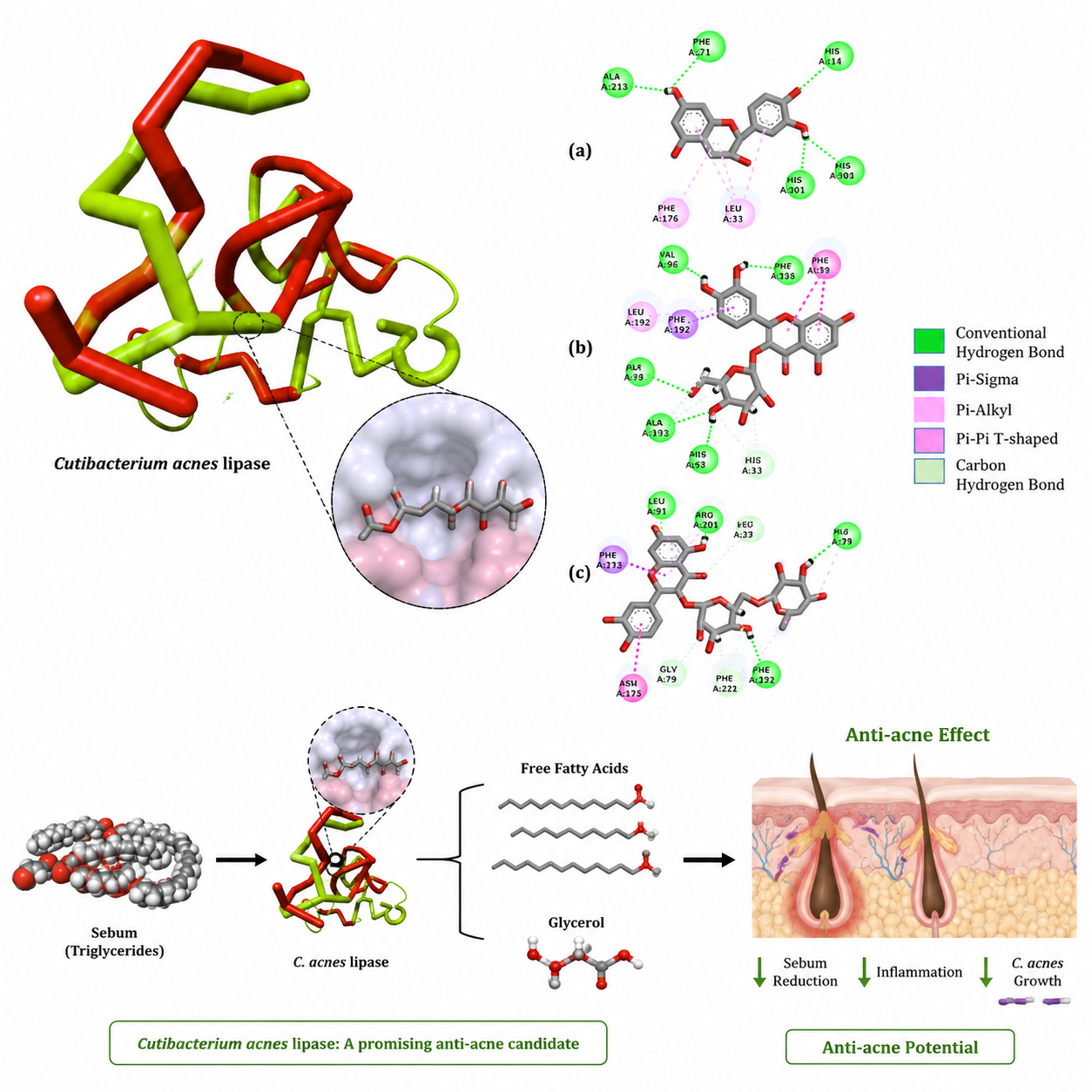
Molecular docking of active compounds from caulerpa lentillifera targeting Cutibacterium acnes lipase as anti-acne candidates
DOI:
10.1980/jses.v1i1.3Published:
2026-06-19Downloads
Abstract
The growing concerns about antibacterial resistance in Cutibacterium acnes (C. acnes) have encouraged the development of alternative acne therapies, including the use of natural bioactive agents. In this study, ten bioactive compounds from Caulerpa lentillifera (C. lentillifera) were docked against C. acnes lipase (PDB: 6KHM) using YASARA Structure and further analyzed with Discovery Studio. Method validation showed a redocking RMSD value of 1.6482 Å, with heptane-1,1-diol serving as the native ligand. Two compounds, isoquercetin and catechin, demonstrated direct interactions with both the catalytic triad and lid-domain residues, while rutin primarily interacted with the lipase lid domain. All three compounds exhibited lower ΔG binding than the native ligand, at −7,3772; −7,3750; and -7,2977 kcal/mol respectively, indicating more stable binding affinities. These findings highlight the potential of isoquercetin, catechin, and rutin as natural lipase inhibitors and support the use of C. lentillifera as a promising source of anti-acne agents