Publication Ethics
Publication Ethics
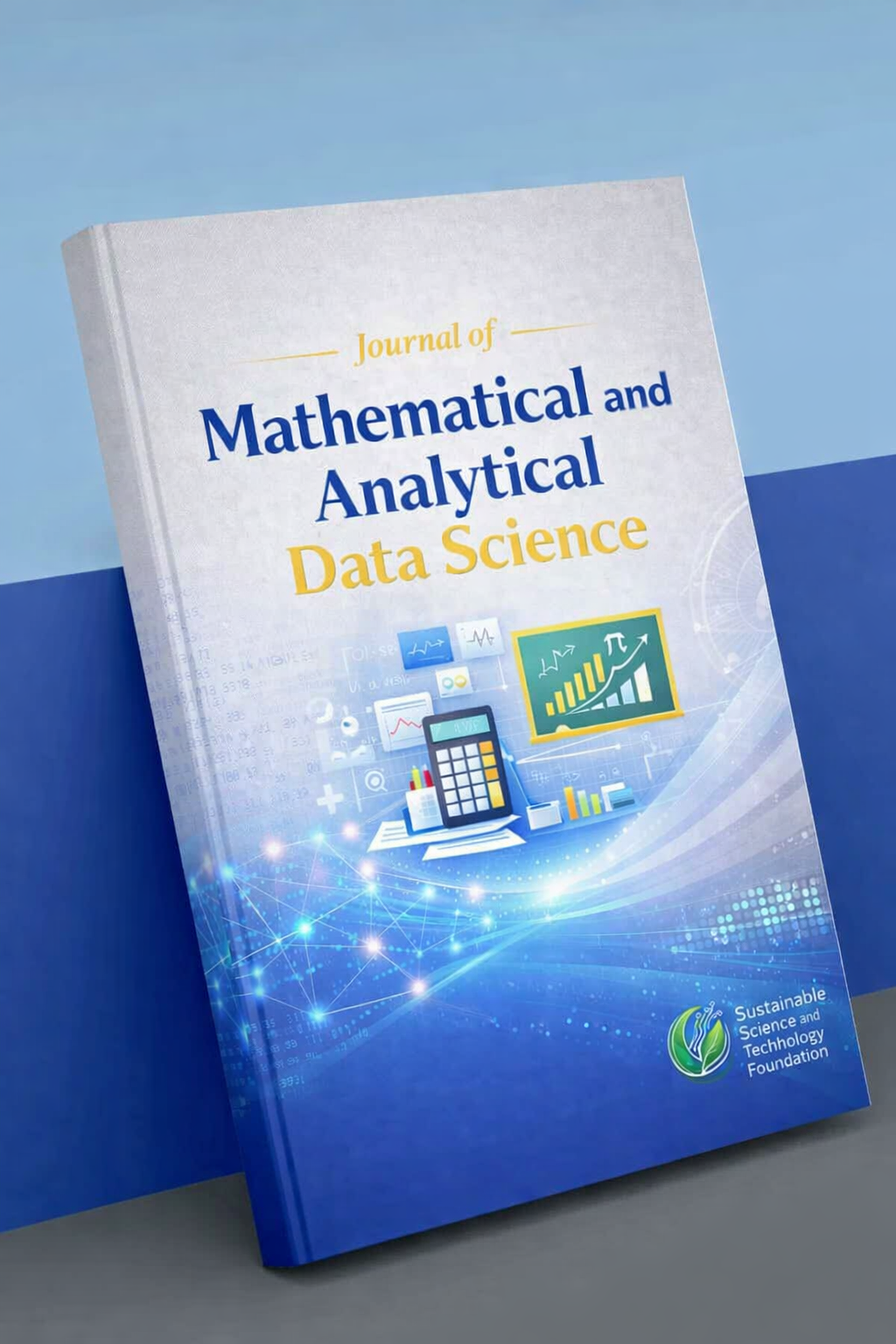
Journal of Mathematical and Analytical Data Science (JMADS) is committed to upholding the highest standards of publication ethics, academic integrity, and responsible research conduct. The journal follows internationally recognized ethical guidelines and best practices in scholarly publishing to ensure the credibility, transparency, and quality of the research it publishes.
Editorial Responsibilities
Editors of JMADS are responsible for making publication decisions based solely on the academic merit, originality, clarity, and relevance of submitted manuscripts. Editorial decisions are independent of authors’ race, gender, institutional affiliation, nationality, religious belief, or political philosophy. Editors ensure a fair, unbiased, and confidential double-blind peer review process and take appropriate action in cases of ethical misconduct, including plagiarism, data fabrication, data falsification, and duplicate publication.
Peer Review Responsibilities
Reviewers are expected to conduct evaluations objectively, constructively, and within the agreed timeframe. All manuscripts received for review must be treated as confidential documents. Reviewers should identify relevant published work not cited by the authors and alert the editors to any potential ethical issues, conflicts of interest, or substantial similarities with other published works. Reviews must be based on scholarly quality, methodological rigor, and contribution to the field.
Author Responsibilities
Authors submitting manuscripts to JMADS must ensure that their work is original, has not been published previously, and is not under consideration by another journal. All sources used in the research must be appropriately cited, and authors must accurately present data, methods, and findings without fabrication or manipulation. Authorship should reflect significant scholarly contributions, and all listed authors must approve the final version of the manuscript and agree to its submission.
Authors are required to disclose any conflicts of interest, financial or non-financial, that could influence the interpretation of their research. Where applicable, authors must confirm that their research complies with relevant ethical standards and regulations.
Plagiarism and Misconduct
JMADS has a zero-tolerance policy toward plagiarism, including self-plagiarism and redundant publication. All submitted manuscripts are screened using plagiarism detection software. Any manuscript found to violate ethical standards may be rejected or retracted, depending on the severity of the misconduct.
Data Transparency and Reproducibility
The journal encourages authors to maintain research transparency and reproducibility by providing sufficient methodological details and, where appropriate, access to data, codes, or supplementary materials. This ensures that research findings can be independently verified and built upon by the scientific community.
Corrections, Retractions, and Complaints
JMADS is committed to correcting the scholarly record when necessary. Editors will consider issuing corrections, retractions, or expressions of concern in cases of significant errors or ethical violations. Complaints and appeals related to editorial decisions or ethical matters will be handled fairly, transparently, and confidentially.
Ethical Commitment
By adhering to these ethical principles, Journal of Mathematical and Analytical Data Science seeks to promote trust, accountability, and excellence in mathematical and analytical data science research, contributing responsibly to the global academic community.